
RUNNING FOUNDATIONS RESOURCE PAGE
If you’ve made it this far, you’ve signed up for the course. Congratulations, we’re excited to share our knowledge with you and learn from you in the upcoming course! Below you’ll find information regarding pre-course assignments, printable slides and key research citations that will be referenced during the course.
PRE-COURSE READING
PRE-COURSE VIEWING
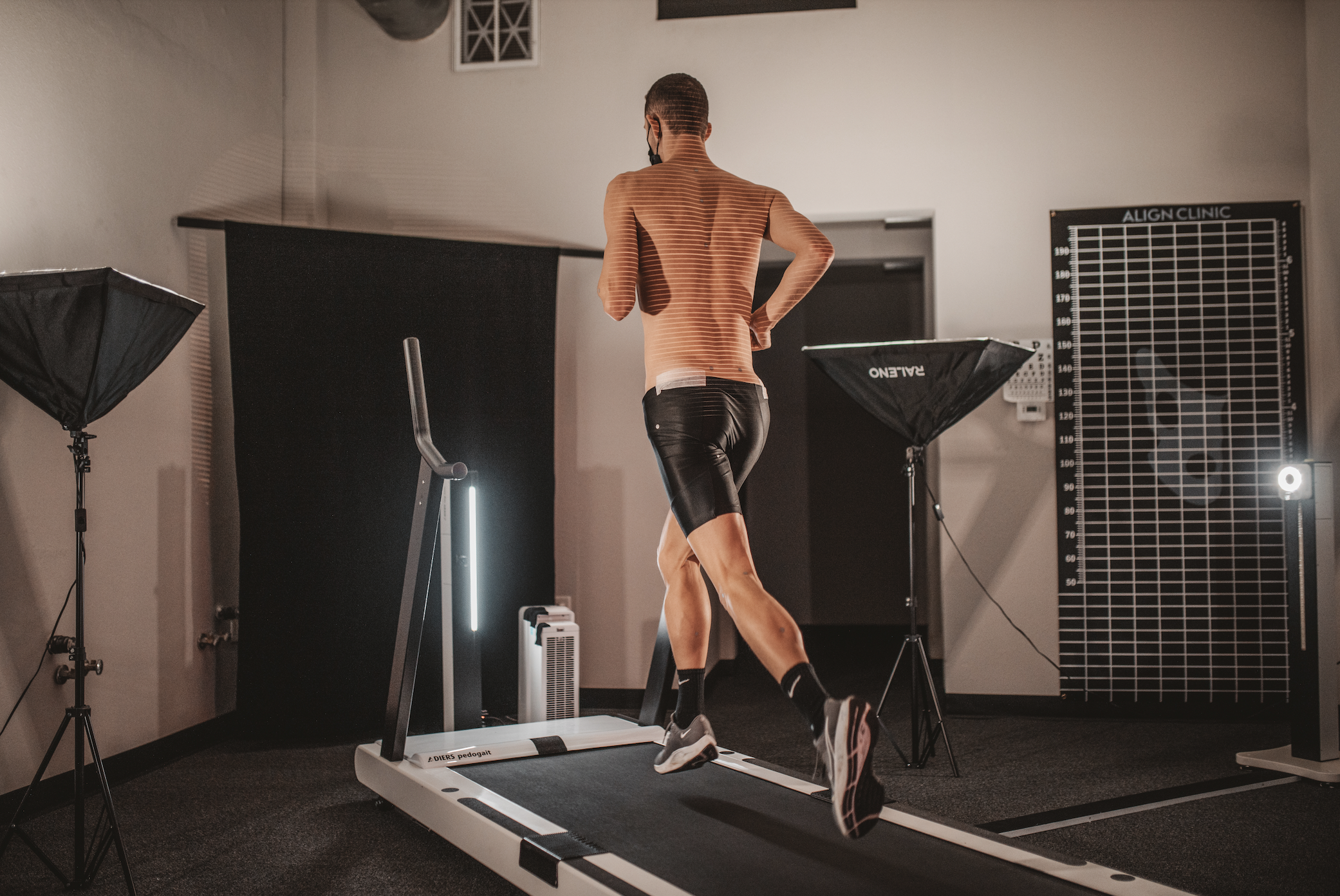
Over the two day Foundations running course there will be a lot of reference to biomechanical data, trends and correlates taken from the DIERS High Performance Biomechanics Lab. In order to familiarize yourself with this system, please review this video before the course. You’ll earn 1 additional hr of CEU credit for this pre-course work.
(Click the white arrow to play).
PRE-COURSE ASSIGNMENT & COMMUNITY OUTREACH
The primary aim of the Running Foundations course is to create local experts in elite running physiotherapy. In order to do this, we ask each attendee to reach out to local high school, college, and club running coaches to set up 2-3 free running evaluations for their athletes. This allows attendees to refine the skills learned in the course while simultaneously demonstrating their expertise to the local running community.
In order to help with this, your course instructors will provide a brief video about the course, our backgrounds, and the community outreach assignment. We encourage attendees to share this in their social media feeds and local marketing to help create interest from the community. We want to let local runners know about your elite training even before the course, so they are scheduling with you after the course. Let’s kick start your running practice even before attending Running Foundations.
COURSE MATERIALS
CITED RESOURCES
Endurance Running and the Evolution of Homo: Bramble and Lieberman
Shock Attenuation in the Human Lumbar Spine during Walking and Running: Castillo and Lieberman
Linking the Spinal Engine with the Legs: A Theory of Human Gait: Serge Gracovetsky
Characterization of Gait Function in Patients with Flatback Deformity
Elastic Energy Savings and Active Energy Cost in a Simple Model of Running
The Stretch Shorten Cycle: Proposed Mechanisms and Methods for Enhancement
An Evidence-Based Video Videotaped Running Biomechanics Analysis: Richard Souza 2015
Relationship between Hip Strength and Trunk Motion in College Cross-Country Runners: Ford 2012
Hamstring Musculotendon Dynamics during Stance Swing Phases of High Speed Running: Chumanov 2011
Muscle contributions to propulsion and support during running: Hamner 2010
Effects of Step Rate Manipulation on Joint Mechanics during Running: Heiderscheit 2011
The capacity of the human iliotibial band to store elastic energy during running: Eng 2015
Running in highly cushioned shoes increases leg stiffness and amplifies impact loading: Kulmala 2018